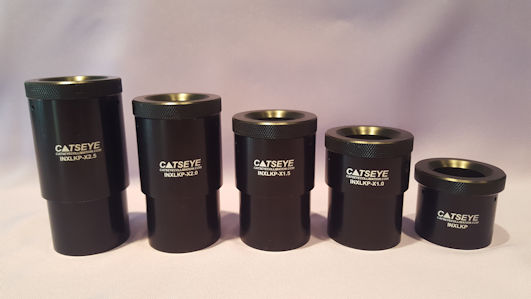
CATSEYETM 2" Autocollimators
The CATSEYE Collimation web site has been changed to a "Frames" format. If you do not see a split Frame to the left, click: Here

The World's First and Foremost Precision 2" Autocollimator!

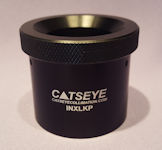
The INFINITY XLTM

2-Inch INFINITY(TM) II Autocollimator
Click for a Closeup

The most discriminating collimation tool available ...

BAR NONE!

To meet the demand for the more critical alignment needed in todays' big, fast Newts, CATSEYETM 2" autocollimators have been carefully engineered and assembled to achieve a new benchmark in precision and visual clarity. In a few short years since the introduction of the first INFINITYTM autocollimator, the CATSEYETM line is recognized as the definitive "gold standard" by performance-minded astronomers world wide.

Now, the new INFINITY XLTM surpasses its predecessor with improved axial convergence sensitivity and larger aperture to more quickly capture those elusive off-axis "ghost" images.

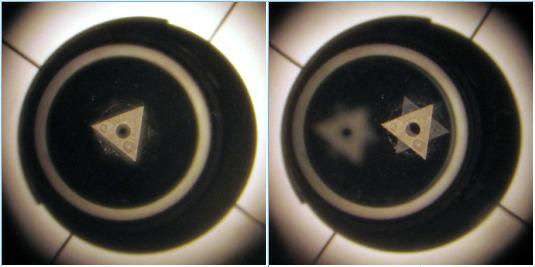
While viewing with the 2" INFINITY XLTM, 4 images of the reflective triangle are usually seen. Convergence of these multiple images, concurrent with the proper Cheshire view, validates precision alignment of the Primary and focuser axes.

Click Each Image For a Closer View.
If Animations stall, refresh your browser.

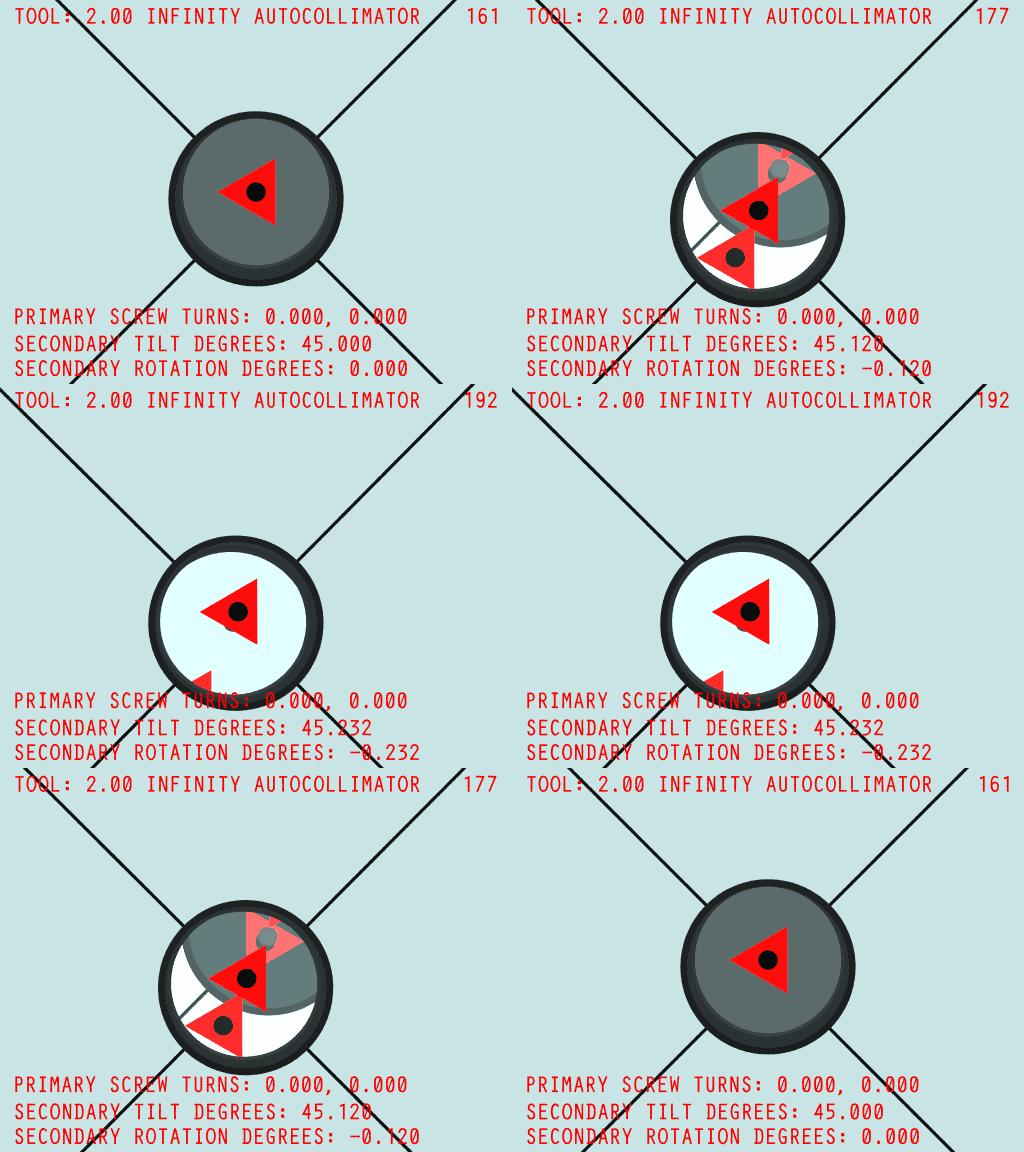
Primary Tilt Animation Secondary Tilt/Rotation Animation
Telescope Animation Frames Modeled & Rendered with POV-Ray
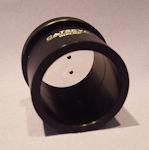
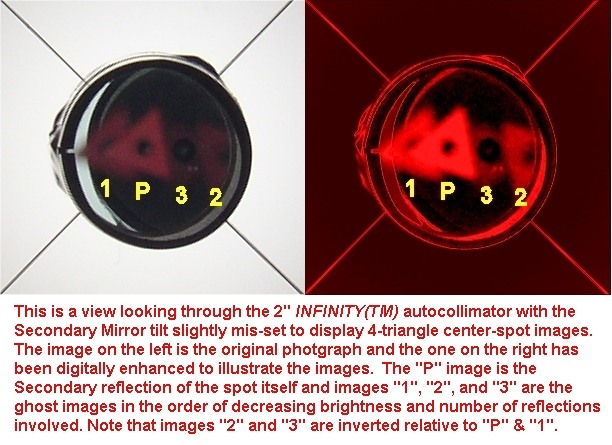
2" INFINITY(TM) displaying 4 triangle center-spot images
Click for a Closeup
The INFINITY XLTM Exclusive Features
  • A Premium First-Surface Mirror that incorporates:
    • 97%R "Enhanced" Aluminum.
    • Dielectric-coating protection.
    • Optically-flat glass.
  • Exclusive mirror registration design to insure "perfect" internal collimation.
  • 1.625" Aperture (15% increase) for faster off-axis "ghost" image discovery.
  • 1.5" barrel length (50% increase) for better drawtube alignment.
  • "Honed" barrel interior surface for improved contrast.
  • Disassembles for easy mirror removal & cleaning (wrench and spare set screw included).
  • Precision-Machined "Black" Delrin Eyepiece and 6061-T6 Aluminum barrel.
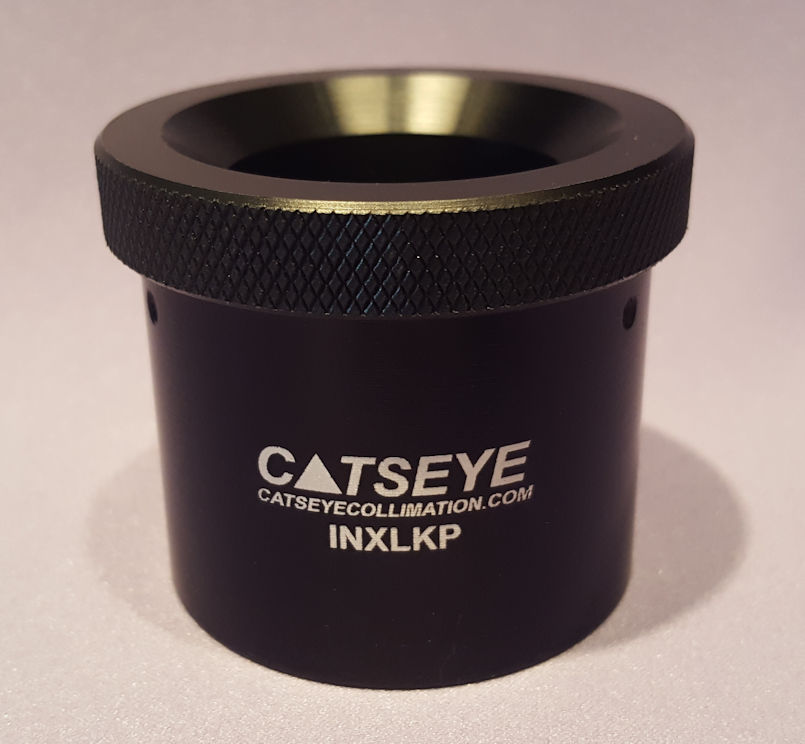
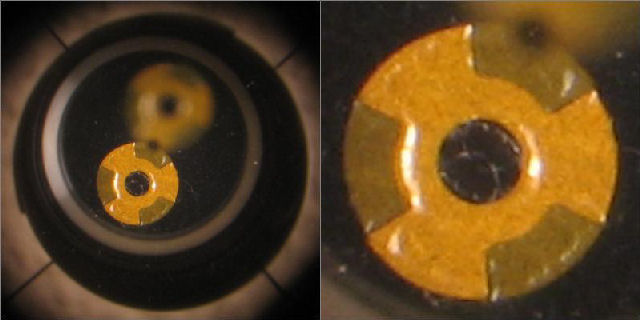
2.00" INFINITY "XL"- Front Mirror View
15% increased autocollimator aperture to 1.625" for easier off-axis "ghost" image discovery.
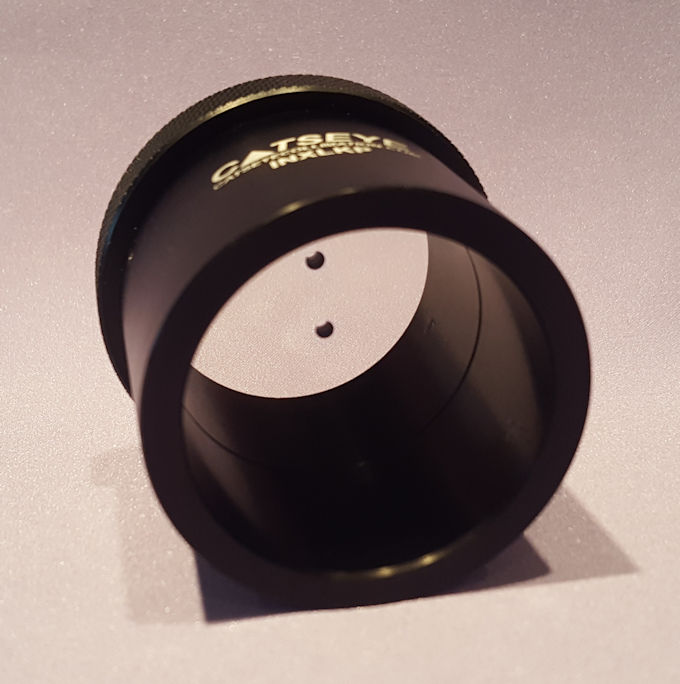
2.00" INFINITY "XL"- Oblique Mirror View
"Brushed" autocollimator barrel interior for improved image contrast.
AUTOCOLLIMATOR REFLECTIONS

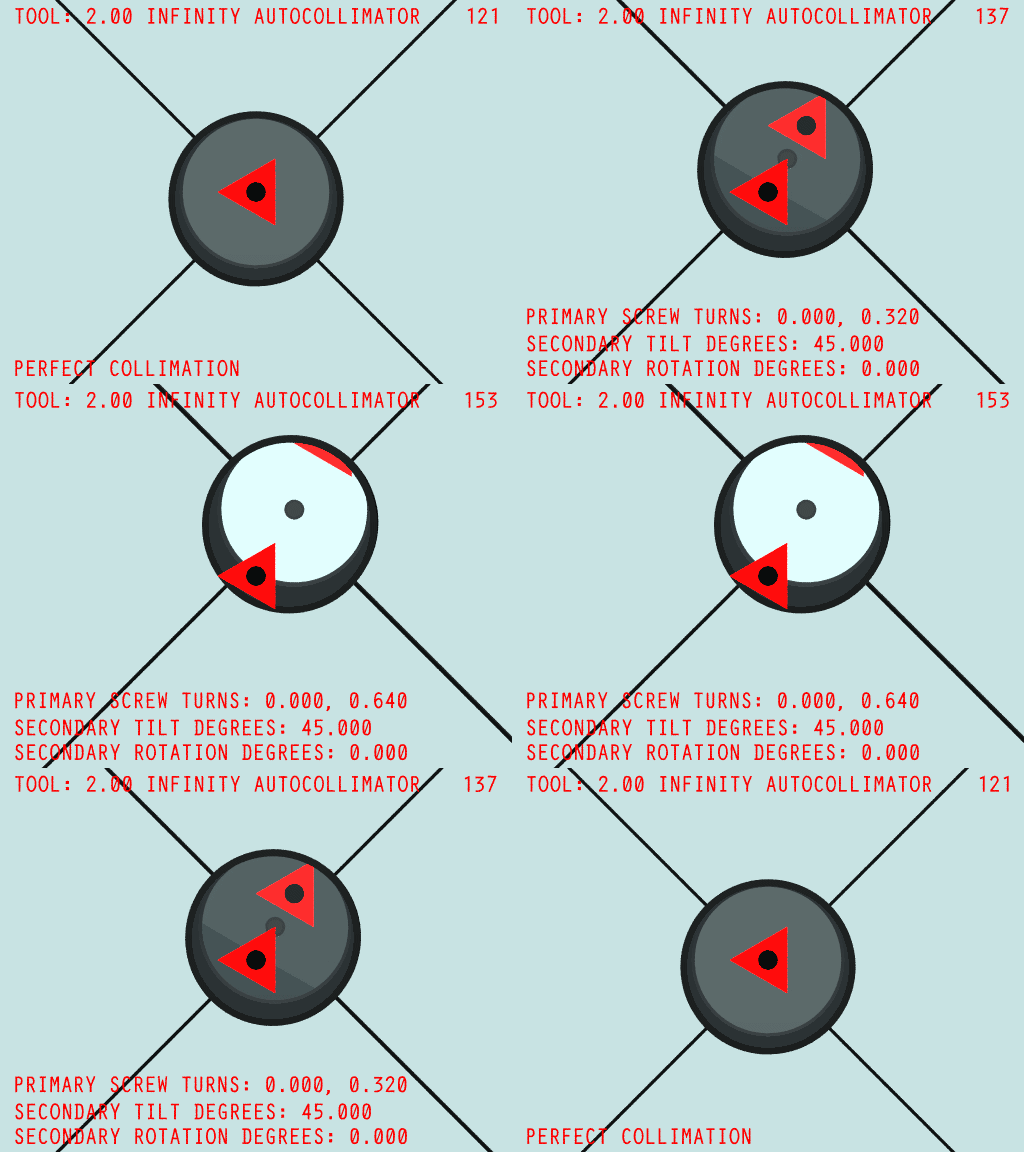
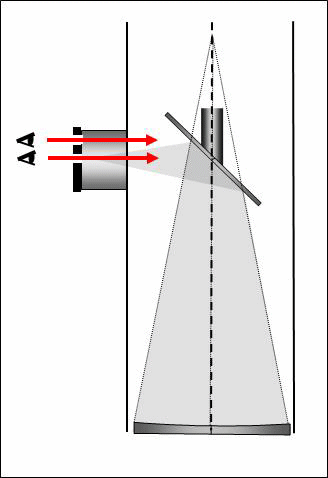
When "perfect" collimation is "close at hand", 4 center-spot reflections can be seen in the INFINITYTM autocollimator and are the result of multiple reflective interactions between the 3 mirror components of Primary, Secondary and Autocollimator.

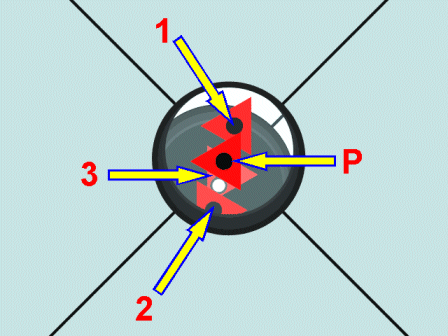
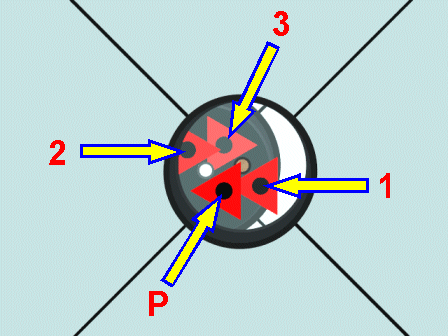
In these simulations below, both Primary and Focuser optical axes alignment errors are present resulting in the reflections being spread apart from their "perfect collimation" stacked position.


You might see something like this ....

Autocollimator View Showing 4 Spot Images

or perhaps this ...

Autocollimator View Showing 4 Spot Images

  • Reflection "P" is the "Primary" or "first" reflection and is the direct reflected image of the spot itself via the Diagonal mirror after 1 FL pass. Reflection "P" is what is visible "without" the autocollimator whereas images (#1, #2, & #3) are reflections of "P".

  • Reflection "1" is generated from reflection "P" after an additional reflection back from the A/C mirror, via the diagonal to be reflected off the Primary and back via the diagonal to the eye for a total of 3 FL passes from the original spot. It's sensitivity to Primary axis error is 4X and to Focuser axis error is 2X.

  • Reflection "2" (inverted) is generated from the "real" image response from the (parabolic) Primary mirror at its Center of Curvature (COC at 2 FL's away) from the spot reflection it sees in the Autocollimator mirror (which is 1 FL away). The trick here is that the autocollimator reflects (or "folds") the real image back onto the Primary surface where it is then seen via diagonal reflection by the eye (just like reflection "P") - it is a total of 5 FL passes from the origin.

    The reflection "2" sensitivity to both Primary and Focuser axes errors is 4X each. Total distance between reflections "1" and "2" is the vector sum of the primary mirror and focuser axial errors. When the other axial error has been removed, this distance is either 8X the primary mirror axial error or 6X the focuser axial error.

  • Reflection "3" (inverted) is a reflection of reflection "#2" following a path like that of reflection "#1" (generated from reflection P) for a total of 7 FL passes to the eye from the original spot. When the faintest reflection (#3) is in view, the distance from "P" to "3" represents a sensitivity to focuser axis error of 2X regardless of the Primary axis error.

    It is this unilateral sensitivity to the focuser axial error that allows us to use this reflection to "zero" the focuser axis with Vic Menard's "Carefully Decollimated Primary Mirror" protocol, leaving the primary mirror axial error, magnified 8X, visualized as the distance between reflections 1 and 2.

    The distance and direction between reflections "#2" and "#3" is always equal to that seen between "P" and "1" and between the two A/C pupil reflections; thus, these two spot reflection "pairs" will always be arranged with their centers forming 2 separate parallel lines that are also parallel to the A/C pupil reflections.


*** Many thanks to Vic Menard and Nils Olof Carlin for their insightful contributions and editing assistance ***
Read: Nils Olof Carlin's "The Autocollimator and its Reflections" updated 12/16/04
Read: Vic Menard's Autocollimator comments:
Click to see Vic's

INFINITY(TM) Image Sequence 3 Movie Clip (57 FRAMES)
Autocollimator Image
Movie

Vic Menard's "Carefully Decollimated Primary" Procedure
(It's helpful to reference the image explanations above. Click on the embedded images for closups)
  1. Start with the scope "closely" collimated--good diagonal positioning and final Cheshire collimation.
  2. Carefully "decollimate" the primary mirror only. I suggest the topmost collimation screw or whichever screw allows the primary mirror to gently "tip" forward (or backward--direction isn't important.) The reason I suggest simple tipping motion is to minimize twisting in a sling or other edge support, which may not be as easily "undone" when the primary is recollimated. Perform this decollimation with the autocollimator in the focuser to ensure that, as the "ghost" reflections are spread apart, they do not leave the face of the autocollimator.
  3. Looking in the autocollimator, you will notice that the primary mirror center spot (P) is slightly offset (because the primary mirror has been decollimated.) On either side of the primary mirror spot (P), you will observe a bright upright reflection (1) and a slightly dimmer inverted reflection (2)--flanking the primary mirror center spot (P). The separation between these 2 reflections, 1 & 2, is 8X the actual primary mirror axial error (+/- any residual focuser axial error) induced when the primary mirror was decollimated. For now, you can ignore the flanking reflections. Look carefully at the primary mirror center spot (P) and you should be able to see a second, fainter, inverted reflection (3) either behind or very close to the primary mirror center spot (P).
  4. Stack the faint, inverted reflection (3) under the primary mirror center spot (P) to form a "Star of David" by adjusting either the diagonal or focuser alignment ONLY. If the focuser is aligned instead of the diagonal, the impact on the primary mirror collimation will be minimized (not eliminated.) However, this is only an issue if the required correction is "significant".
  5. With P & 3 precisely stacked, go back to the same primary mirror collimation screw you used to decollimate the primary mirror and "undo" the decollimation, watching in the autocollimator as reflections 1 & 2 slowly merge with the primary mirror center spot and 1, 2, & 3 finally disappear from view.
  6. Verify the primary mirror collimation with a calibrated Cheshire. If it agrees with the autocollimator--you're done. If there is a slight primary mirror axial correction needed, make the correction and reiterate the autocollimator procedure. Now "axial" collimation is fully corrected and you can reevaluate the diagonal positioning if necessary.